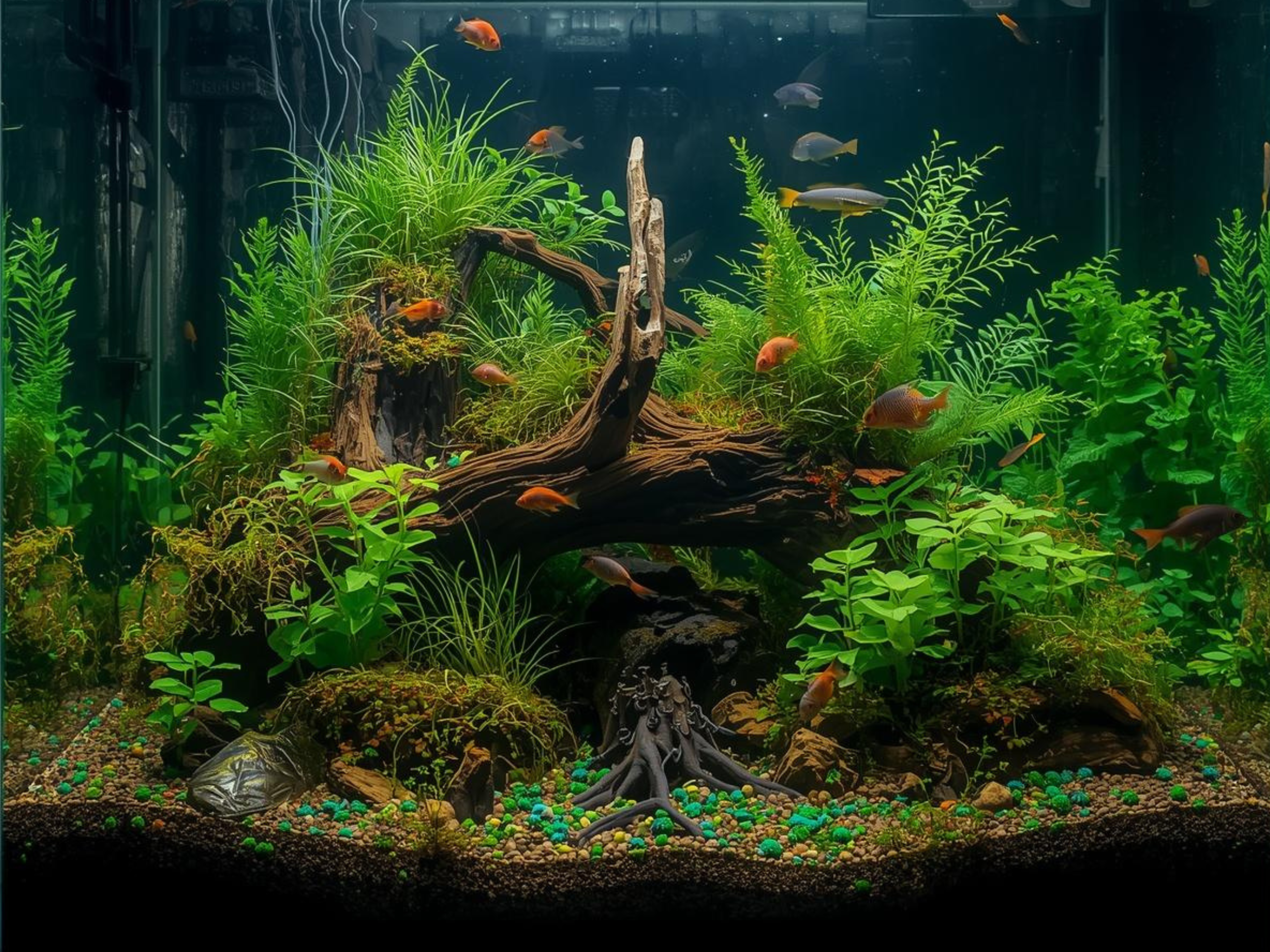
Aquascaping is more than just keeping fish, it’s about creating a living, underwater landscape. A well-designed aquarium brings together plants, water, and fish in a balanced ecosystem that is both beautiful and relaxing to watch.
If you’re new to aquascaping, don’t worry. With the right setup and a little patience, anyone can create a thriving planted tank.
🪴 Choosing the Right Plants
Aquatic plants are the foundation of any aquascape. They don’t just improve the look of your tank—they also help maintain water quality by absorbing excess nutrients.
For beginners, it’s best to start with hardy, low-maintenance plants. Varieties like Java Fern and Anubias are very forgiving and grow well in most conditions. If you want to create a carpet effect, Dwarf Hairgrass is a popular choice, while plants like Rotala work well in the background to add height and depth. For a splash of color, Alternanthera can give your tank a vibrant red touch.
A simple rule to follow is placing shorter plants in the foreground and taller plants in the background. This helps create a natural and balanced layout.
💧 Understanding Water Parameters
Healthy plants and fish depend on stable water conditions. You don’t need perfect numbers, but consistency is very important.
Most aquariums do well with a temperature between 24–28°C and a slightly acidic to neutral pH (around 6.0–7.5). Ammonia and nitrite levels should always be at zero, as even small amounts can be harmful to fish. Nitrate is less harmful but should still be kept low through regular water changes.
Sudden changes in water parameters can stress fish and plants, so always aim for stability over perfection.
🔄 Why Cycling Your Tank is Important
One of the most important steps in setting up an aquarium is cycling. This is the process of building beneficial bacteria that make the water safe for fish.
In a new tank, waste from fish, leftover food, and plant matter produces ammonia, which is highly toxic. Over time, beneficial bacteria develop and convert this ammonia into nitrite, which is still harmful, and then into nitrate, which is much safer and can be removed through water changes or absorbed by plants.
This natural process is known as the nitrogen cycle, and it usually takes about 2 to 4 weeks to complete. A tank is considered ready when both ammonia and nitrite levels drop to zero.
Skipping this step or adding fish too early often leads to stress, illness, or even fish loss. Taking the time to cycle your tank properly creates a strong and stable foundation for your aquascape.
💡 The Role of Lighting and CO₂
Lighting and CO₂ are essential for plant growth. Think of them as the energy and fuel your plants need to thrive.
Good lighting allows plants to carry out photosynthesis, helping them grow strong and maintain vibrant colors. Without enough light, plants may become weak, pale, or stop growing altogether. Keeping your lights on for about 6 to 8 hours a day is usually ideal.
CO₂, or carbon dioxide, is another key factor. In natural environments, plants have access to plenty of CO₂, but in aquariums, it is often limited. Adding CO₂ can significantly improve plant growth, making them fuller, healthier, and more colorful.
That said, beginners can still achieve a beautiful tank without CO₂ by choosing easy plants. If you’re aiming for a more advanced or lush aquascape, adding CO₂ will make a noticeable difference.
The key is balance—too much light without enough CO₂ and nutrients can lead to algae problems, while a well-balanced setup results in a healthy, thriving aquarium.
🚀 Starting Your First Tank
Setting up your aquarium doesn’t have to be complicated. Begin by choosing a suitable tank along with a good filter and lighting system. Add a nutrient-rich substrate like aqua soil to support plant growth, then arrange your rocks and driftwood to create your desired layout.
Once your hardscape is in place, plant your aquarium generously from the start. This helps reduce algae and creates a more natural look. When filling the tank with water, do it slowly to avoid disturbing the substrate.
After setup, allow the tank to cycle before adding any fish. This step is essential for long-term success.
🔁 Maintaining Your Aquarium
A healthy aquarium only needs simple, regular care. Performing a weekly water change of about 25–50% helps keep nitrate levels under control and refreshes the tank.
Trimming plants regularly keeps them looking neat and encourages new growth. Cleaning the glass and checking your equipment ensures everything continues to run smoothly.
Providing proper lighting and adding fertilizers when needed will also help your plants stay healthy and vibrant.
⚠️ Common Mistakes to Avoid
Many beginners run into issues by rushing the process. Adding fish before the tank is fully cycled is one of the most common mistakes. Overfeeding, excessive lighting, and skipping water changes can also lead to algae problems and poor water quality.
Taking things slow and sticking to a simple routine will help you avoid most of these issues.
🌊 Final Thoughts
Aquascaping is a rewarding hobby that combines creativity with a bit of science. Your first tank doesn’t have to be perfect—what matters is learning and enjoying the process.
With the right setup, proper cycling, and consistent maintenance, your aquarium will grow into a beautiful and balanced underwater ecosystem.